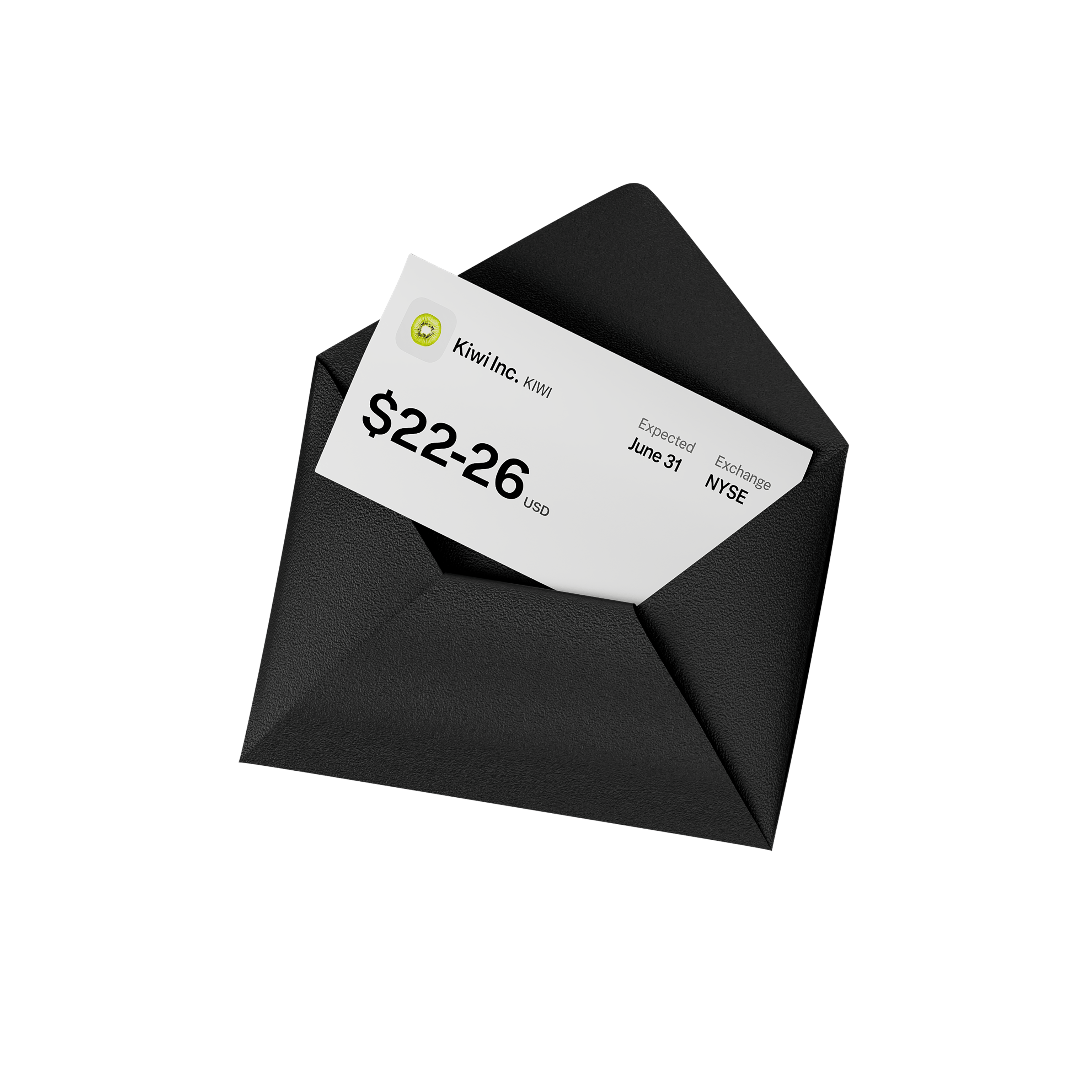
If you've spent any time reading financial news, you've probably come across the term "IPO." Companies going public often make headlines — but what does the process actually involve, and what does it mean for everyday investors? This article breaks down what an IPO is, how it works, and what Canadian investors should know before getting involved.
What is an IPO?
IPO stands for Initial Public Offering (IPO). It's the process by which a private company sells shares to the public for the first time, becoming a publicly traded company. In other words, an IPO is how a company transitions from being privately held — with ownership limited to founders, employees, and private investors — to having its shares available on a stock exchange like the Toronto Stock Exchange (TSX) or the New York Stock Exchange (NYSE).
Here are a few key terms worth knowing:
Private company: owned by founders, employees, and private investors; shares are not available to the general public.
Public company: shares are listed on a stock exchange and available for anyone to buy and sell.
Going public: the common term used when a company completes an IPO and begins trading on an exchange.
Understanding what an IPO means in the stock market is straightforward: it's the moment a company's shares become accessible to regular investors for the first time.
How does an initial public offering work?
The IPO process typically takes several months and involves multiple parties working together. Here's an overview of the key steps, from preparation to listing day.
1. Selecting underwriters and advisors
The company hires investment banks — known as underwriters — to guide the entire IPO process. Underwriters help assess the company's value, prepare the necessary documents, and ultimately sell shares to investors. The lead underwriter typically assembles a group of banks and broker-dealers, called a syndicate, that shares responsibility for distributing shares to buyers.
2. Filing regulatory documents
Before shares can be sold, the company must file a prospectus — a detailed document that covers its financials, business model, management team, and risks.
In Canada, the prospectus is filed on the System for Electronic Document Analysis and Retrieval Plus (SEDAR+) with provincial securities regulators, known as the Canadian Securities Administrators (CSA). In the U.S., companies file an S-1 Registration Statement with the Securities and Exchange Commission (SEC). The prospectus is the primary source of information for anyone evaluating the company before its IPO, and it's publicly available for review.
3. Setting the IPO price
Underwriters assess investor demand and the company's valuation to determine the initial share price. This process is called “book building” — underwriters collect bids from institutional investors to gauge how much demand exists and at what price. A preliminary price range is set, then narrowed based on actual interest. The final IPO price is determined just before trading begins. It's worth noting that the opening trading price on listing day may differ from the IPO price, depending on market demand.
4. Launching on the stock market
On listing day, shares begin trading on a stock exchange — such as the TSX or NYSE — and become available on the “secondary market” (the general market where all investors can buy and sell). This is when and where retail investors can typically buy shares. The stock price on listing day is determined by supply and demand, which means it can open higher or lower than the IPO price.
Why do companies go public?
Companies pursue an IPO for several reasons, and understanding their motivations can help you evaluate the companies behind the offering. Here's what typically drives a company IPO.
Raising capital for growth
The primary reason most companies pursue an initial public offering is to raise money from public investors. Proceeds can fund expansion into new markets, research and development, hiring, or paying down existing debt. Unlike private funding rounds, a public offering gives a company access to a much larger pool of capital.
Providing liquidity for shareholders
Before an IPO, shares in a private company are illiquid — founders, early employees, and private investors can't easily sell their stakes. Going public allows these early shareholders to sell some or all of their shares and diversify their holdings. This is a key motivation for venture capitalists and angel investors who funded the company in its early stages.
Building brand credibility
Being listed on a public exchange increases a company's visibility and perceived legitimacy. Public companies are subject to ongoing disclosure requirements, which can build trust with customers, partners, and lenders. A public listing can also help a company attract talent through stock-based compensation programmes.
Who is involved in the IPO process?
An IPO involves several key players beyond the company itself. Here's a quick overview of who does what.
Investment banks and underwriters
Investment banks lead the deal from start to finish. They assess the company's value, set the price range, market shares to institutional investors, and manage the distribution process. The lead underwriter coordinates a syndicate of other banks and broker-dealers to ensure broad distribution.
Legal and financial advisors
Lawyers conduct due diligence and ensure the company meets all regulatory requirements. Accountants and auditors verify the company's financial statements and prepare them for public disclosure. Together, these advisors help prepare the prospectus and other required filings.
Securities regulators
In Canada, provincial securities regulators review and approve the prospectus before the IPO can proceed. In the U.S., the SEC performs this role. Regulators exist to protect investors by ensuring companies disclose accurate and complete information before shares are sold to the public.
How is an IPO stock price determined?
The IPO price isn't plucked out of thin air — it's the result of a structured process designed to balance the company's goals with investor demand. Here's how it works for most IPOs:
Book building: underwriters collect bids from institutional investors to assess how much demand exists and at what price levels.
Price range: a preliminary range is set based on the company's valuation and early investor interest, then narrowed as more bids come in.
Final IPO price: determined just before trading begins, reflecting what large investors are willing to pay. This may differ from the opening market price on listing day.
It's important to understand that the final IPO stock price reflects what institutional investors are willing to pay — not necessarily the company's "true" value. Most retail investors don't get access to shares at the IPO price. Instead, they buy on the secondary market once trading opens, often at a different price depending on demand.
Not every company goes public this way. Closed-end funds and special purpose acquisition companies (SPACs) usually launch at a fixed price set in advance, rather than one discovered through book building. That's because there's no operating business to value yet — a closed-end fund is really just a pool of cash that'll be invested in a portfolio of securities, and a SPAC is a pool of cash raised to acquire a private company down the road. The offering price reflects the size of the pool, not a market-tested view of any underlying business. Once trading opens, the price can drift above or below that fixed level based on how investors feel about the manager, the strategy, or (for SPACs) the eventual acquisition target.
Benefits of investing in IPO stocks
Investing in IPO stocks can be appealing for several reasons. Here's what draws investors to newly public companies.
Early access to growing companies
IPOs give you the opportunity to buy shares in a company at the beginning of its public market journey. Some of the most well-known companies today — across technology, retail, and other sectors — were once IPO stocks. Getting in early means you can potentially benefit from long-term growth if the company performs well after listing.
Potential for significant returns
Some IPO stocks have delivered strong gains in the days, months, or years following their debut. That said, historical data shows that IPO returns vary widely from year to year — some years produce strong results, while others don't. Past performance of IPO stocks does not guarantee future results.
Portfolio diversification opportunities
Adding IPO stocks to a portfolio can introduce exposure to sectors, industries, or companies not already represented in your holdings. Newly public companies are often in high-growth industries such as technology, healthcare, or clean energy. That said, diversification through IPOs carries its own risks — which are worth understanding before you invest.
Risks of investing in IPOs
IPO investing isn't without drawbacks, and it's important to weigh the risks just as carefully as the potential rewards.
Limited company track record
Newly public companies have little or no public financial history, making it difficult to assess their true value or future performance. Unlike established public companies, IPO stocks lack years of quarterly earnings reports, analyst coverage, and market data. You'll need to rely heavily on the prospectus — which is prepared by the company and its advisors.
Price volatility after listing
IPO stocks often experience significant price swings in the days and weeks following their debut as the market finds equilibrium. Early trading can be driven by hype, media coverage, and speculative buying rather than the company's fundamentals. Prices can fall sharply after the initial excitement fades, particularly if the IPO was overpriced relative to demand.
Lock-up periods and insider selling
After an IPO, company insiders — founders, executives, and early employees — are typically restricted from selling their shares for a set period, often 90 days to six months. This restriction is known as the lock-up period. When the lock-up period expires, insiders may sell large volumes of shares, which can put significant downward pressure on the stock price. It's worth paying attention to upcoming lock-up expirations when evaluating whether to hold IPO stocks.
How to invest in an IPO in Canada
If you're interested in buying IPO stocks in Canada, here's what the process looks like in practice. It's worth noting upfront that most retail investors don't get access to shares at the IPO price — allocations typically go to institutional investors first. Most Canadians buy IPO shares on the secondary market once trading opens on listing day, and that's perfectly normal.
1. Open a brokerage account
To buy any stock — including newly listed IPO stocks — you need an account with a brokerage platform that provides access to Canadian and U.S. stock exchanges. Make sure your account is funded and ready before a company's listing date if you plan to buy on the first day of trading.
2. Research upcoming IPOs
Check the TSX new listings page or reputable financial news sources for announcements about upcoming IPOs. Review the company's prospectus to understand the business model, financials, and risks. Pay attention to the expected listing date, the IPO price range, and the number of shares being offered.
3. Place your order when trading begins
Most retail investors buy IPO shares on the secondary market once trading opens — not at the IPO price. The opening price on listing day may be higher than the IPO price if demand is strong, or lower if interest is weak.
4. Monitor your holdings
IPO stocks can be highly volatile in the weeks and months following listing, so stay informed about company news and earnings updates. Be aware of the lock-up expiry date, as insider selling after this period can affect the stock price. Revisit your investment thesis regularly — the reasons you bought the stock should still hold true over time.
What happens after a company goes public?
Once the confetti settles on listing day, the real work begins — both for the company and for investors holding its shares. Here's what to expect.
The lock-up period explained
The lock-up period is a contractual restriction that prevents company insiders from selling their shares for a specified time after the IPO, typically ranging from 90 days to six months. Lock-up periods are designed to prevent a flood of insider selling immediately after listing, which could destabilise the stock price. The lock-up expiry date is publicly disclosed in the prospectus, and it can be a significant event for the stock — so it's worth noting when you're doing your research.
Early trading volatility
It's normal for IPO stocks to experience significant price swings in the first days and weeks of trading. The market is still discovering the "right" price for the stock, and early trading is often driven by sentiment and speculation as much as fundamentals. If you have a short time horizon, this period can be especially nerve-wracking.
Long-term stock performance
IPO performance over the long term varies widely. Some stocks trade well above their IPO price years later; others fall and never recover. There's no reliable pattern that predicts whether an IPO stock will outperform the broader market over time. Long-term investors should evaluate IPO stocks using the same criteria they'd apply to any stock: business fundamentals, competitive position, and valuation.
IPO alternatives for going public
A traditional IPO isn't the only route a company can take to become publicly traded. Here are two alternatives you may encounter.
Direct listings
In a direct listing, a company lists its existing shares directly on a stock exchange without hiring underwriters or issuing new shares. Because no new shares are created, the company doesn't raise new capital — the purpose is primarily to give existing shareholders a way to sell their stakes on the open market.
Special purpose acquisition companies
A Special Purpose Acquisition Company (SPAC) — sometimes called a "blank cheque company" — is a shell company that raises money through its own IPO with the sole purpose of acquiring a private company. Once the SPAC identifies and merges with a target company, that company effectively becomes publicly traded without going through the traditional IPO process. SPACs offer a faster route to public markets but come with their own risks and regulatory considerations.
Method | How it works | Key difference from IPO |
|---|---|---|
| Direct listing | Company lists existing shares on an exchange without issuing new ones | No underwriters; no new capital raised |
| SPAC | A shell company raises money through its own IPO, then merges with a private company to take it public | Faster route to public markets; bypasses traditional IPO process |
Is investing in an IPO right for you?
There's no one-size-fits-all answer. IPO investing can be exciting — you're getting in on a company's public market debut — but it also comes with meaningful risks that aren't present with established stocks.
Before investing in any IPO, consider your risk tolerance, your investment timeline, and your overall financial goals. IPO stocks tend to be more volatile than established companies, and the limited financial history available means you're working with less information than you'd have with a company that's been public for years.
Do your own research. Read the prospectus. Understand the company's business model, competitive landscape, and how it plans to use the capital it raises. If the fundamentals make sense and the investment fits your broader strategy, an IPO could be worth considering. If not, there's no pressure to participate — newly public companies don't stop trading after listing day, and you can always evaluate the stock once more information becomes available.