Wealthsimple for physicians
Corporate investing for physicians
From building savings in residency to winding down your practice, here’s how to handle investing, taxes, debt, and your corporation at every stage.

A money guide for physicians, from med school to retirement
Med school build the habits before the paycheque
Debt and money habits in med school
How to use a student line of credit without letting it set your budget.
Pay off school loans or invest first?
For most physicians it’s not either-or. Here’s what tips the balance.
How your specialty can shape your finances
Income, and overhead can vary by specialty. So does your plan.
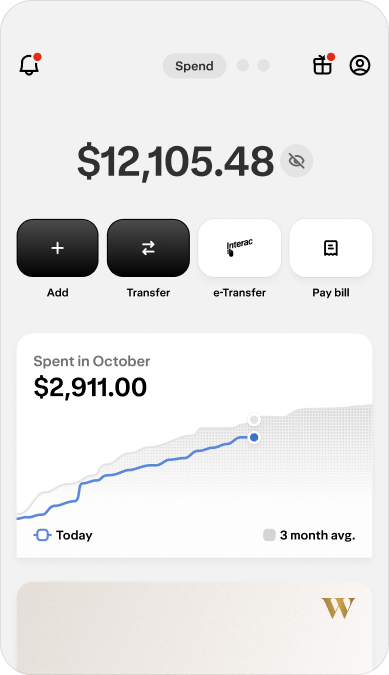
An everyday account that earns interest. No monthly or FX fees, and we cover ATM fees worldwide.
Up to 2.25% interest
Earn 1.25% to 2.25%, depending on your total assets with us. Calculated daily, paid monthly, subject to change.
Read more
Earn 1.25% to 2.25%, depending on your total assets with us. Calculated daily, paid monthly, subject to change.
Up to 2.25% interest
Read more
Earn 1.25% to 2.25%, depending on your total assets with us. Calculated daily, paid monthly, subject to change.
Grow your savings tax-free. Tell us your goals and we’ll build and manage a diversified portfolio for you.

$7,000 of new room in 2026
Growth and withdrawals are tax-free, and unused room carries forward.
Read more
Growth and withdrawals are tax-free, and unused room carries forward.
$7,000 of new room in 2026
Read more
Growth and withdrawals are tax-free, and unused room carries forward.
File your taxes for $0. We search 400+ credits and deductions you may qualify for.

CRA NETFILE-certified
File online and send your return straight to the CRA.
Read more
File online and send your return straight to the CRA.
CRA NETFILE-certified
Read more
File online and send your return straight to the CRA.
Residency your first real paycheque and what to do with it
The average gross clinical payment was $383,000 in 2023–24. Here’s what’s left after overhead and taxes.
Setting up your practice the money decisions that come first
Should you incorporate as a physician?
Usually it’s worth it once you earn more than you spend. Here’s how to tell.
Employee, contractor, or owner?
How doctors get paid in Canada, and what each setup means for your taxes.
Dividends vs. salary
How to pay yourself from your corporation and still build RRSP room.
Banking for incorporated physicians
What your professional corporation needs from a business account.
Self-employed taxes in Canada
Fee-for-service income, tax instalments, and what you can deduct.
With inflation at 2-3%, $200,000 sitting idle in your corporation could lose up to this much purchasing power every year.
Managing your corporation keep more of what it earns
Tax planning for incorporated physicians
How to use your corporation’s lower tax rate without tripping the passive income rules.
Passive income and business deductions
Your corporation can earn $50,000 of passive income a year before your small business rate starts to shrink.
Health spending accounts in a corporation
How to pay for health and dental costs with pre-tax corporate dollars.
Best business bank account in Canada
How business chequing accounts compare on fees, interest, and e-Transfers.
Hidden cost of fees
How investment fees compound over a career, and how to check what you pay.
Retirement turn your corporation into a paycheque
How to draw dividends, salary, and RRIF income in an order that keeps you in lower tax brackets.
Join 20,000+ physicians who use Wealthsimple
FAQs
Why do physicians choose Wealthsimple?
Why do physicians choose Wealthsimple?
You can manage your personal accounts, your practice’s banking, and your corporation’s investments in one place, with low fees and access to advice as your needs grow.
Should doctors incorporate in Canada?
Should doctors incorporate in Canada?
It depends on things like how much you earn compared with what you spend, your province’s rules for medical professional corporations, and the cost of setting one up and running it. Your accountant and our advisors can look at your numbers with you. If you incorporate, you can open business chequing and corporate investment accounts with Wealthsimple.
Should incorporated physicians pay themselves salary or dividends?
Should incorporated physicians pay themselves salary or dividends?
They work differently. Salary creates RRSP room and CPP contributions, and dividends don’t. The right mix depends on your income, savings goals, and retirement plans, so it’s worth working through with your accountant. Our advisors can help you plan how the way you pay yourself fits your investing.
Where can incorporated doctors invest their corporate savings?
Where can incorporated doctors invest their corporate savings?
Money kept in your corporation can be invested through an account in the corporation’s name. With Wealthsimple, you can trade stocks and ETFs with no commissions, choose a managed portfolio, or use direct indexing. What fits depends on your goals and timeline, and our team can walk you through the options.
What accounts can I open for my medical professional corporation?
What accounts can I open for my medical professional corporation?
Business chequing to get paid, pay staff, and pay the CRA. Business savings to set aside tax money. Corporate investment accounts for self-directed trading, managed portfolios, or direct indexing.
What does Wealthsimple charge for a corporate investment account?
What does Wealthsimple charge for a corporate investment account?
Self-directed trading has no commissions on Canadian and U.S.-listed stocks and ETFs. Other fees, like currency conversion on U.S. trades, may apply. Managed corporate portfolios charge an annual management fee based on your total assets with Wealthsimple:
- 0.5% for Core
- 0.4% for Premium
- 0.2% to 0.4% for Generation
The ETFs in managed portfolios also have their own fund fees (MERs). See the managed investing fee schedule.
How do I get personalized advice?
How do I get personalized advice?
On Demand Advice is available from $100,000 in assets. Wealth management, with a dedicated team, is available from $1,000,000 in managed investing accounts. Either way, you can start by talking to our team.
What can Wealthsimple offer during med school and residency?
What can Wealthsimple offer during med school and residency?
Most of your early money decisions happen in personal accounts:
- Chequing: an everyday account that earns interest, with no monthly or FX fees.
- TFSA: invest and grow your savings tax-free.
- RRSP: contribute now and save the deduction for when your income rises.
- FHSA: save for your first home, tax-free.
- Tax: file your return and claim deductions like professional dues and exam fees.
- Mortgages: for when you’re ready to buy.
I’m an international medical graduate. Can I open accounts?
I’m an international medical graduate. Can I open accounts?
Yes. You can open personal accounts like chequing, a TFSA, an RRSP, or an FHSA once you’re a Canadian resident, of the age of majority, with a SIN. Each account has its own eligibility rules.