Money & the World
Tiny(ish!) Tweaks To Help Canadian Cities Flourish
Big cities, big problems — Canadians know this all too well. So we went around the world in search of little ways to make urban life more liveable.
Wealthsimple makes powerful financial tools to help you grow and manage your money. Learn more
Mind-numbing traffic bottlenecks. Unaffordable housing. Bitter turf wars between drivers and cyclists. Canada’s cities face challenges so sprawling and complex that we often can’t agree on how to address them. But what if we started with small steps — really small, as in teeny tiny — to make our urban centres slightly more liveable? Little wins add up fast. So we surveyed some of the most innovative places around the world, consulted an urban-planning expert, and came up with a to-do list. Let’s think small, folks!
Barcelona, Spain:
Time-saving tech that scours for parking so you don’t have to. Drivers on the hunt for parking are responsible for nearly a third (!) of urban traffic and one in five traffic accidents. To get those bonkers numbers down, Barcelona uses smart-tech sensors that feed information to an app, which drivers use to see open parking spots in real time. That, in turn, cuts the time spent cruising, helping to reduce accidents and CO2 emissions.
Atlanta, among other U.S. cities:
OK, a really nerdy one: tax land at a higher rate than buildings to encourage density. A new paper published in the Journal of Public Economics has a pretty lightbulb-y finding: when cities tax land at a higher rate than structures, a bunch of metrics — including population density, small-business formation, and even earnings — grow at a faster rate because lower taxes on structures can encourage density and development. And density, indirectly, often lowers housing costs.
Lugano, Switzerland:
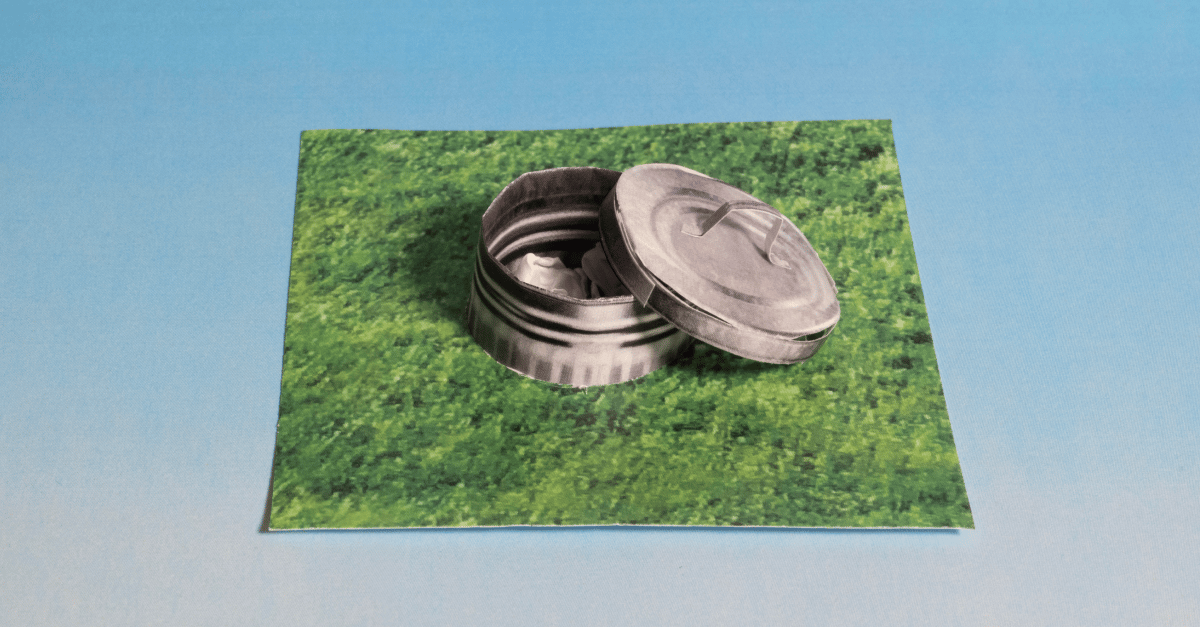
Super-stealthy trash cans that hide litter deep underground. You gotta check out these garbage bins in Switzerland, which have hidden underground “silos” so they don’t overflow — a genius trick that also reduces the city’s total bin needs. When the bins approach capacity, a sensor alerts Lugano’s waste department, which dispatches a truck to lift the entire bin — silo and all — and empty it. The process is seamless, says urban designer Tiffany Chu, ex-chief of staff to Boston’s enterprising current mayor who globetrots and documents “tiny tweaks” like these on her Instagram.
Xiamen, China:
Bicycle skyways that zip riders over car traffic. Bikes, it’s been said, are the vehicle of the future — they’re good for your health, your wallet, and the environment. Some experts estimate that half of the world’s population will be biking by 2050. Our cities, though, are built for cars, so how do we retrofit them for bikes? One option: Xiamen’s “bicycle skyway,” an elevated pathway that soars above traffic, separating cyclists and drivers.
Columbus, Ohio:
Traffic signals that give first responders a green light. Emergency vehicles can’t afford to be delayed by stoplights, so a handful of North American cities have addressed the issue by syncing fire trucks, police cruisers, and ambulances with the traffic grid. Whenever one speeds toward an intersection, its traffic lights flip to green — and everyone else’s go red. A few Canadian cities (including Calgary) already use the technology, while others (like Winnipeg) have piloted it. In Columbus, smart lights have reduced emergency response times by 15%.
Copenhagen, Denmark:
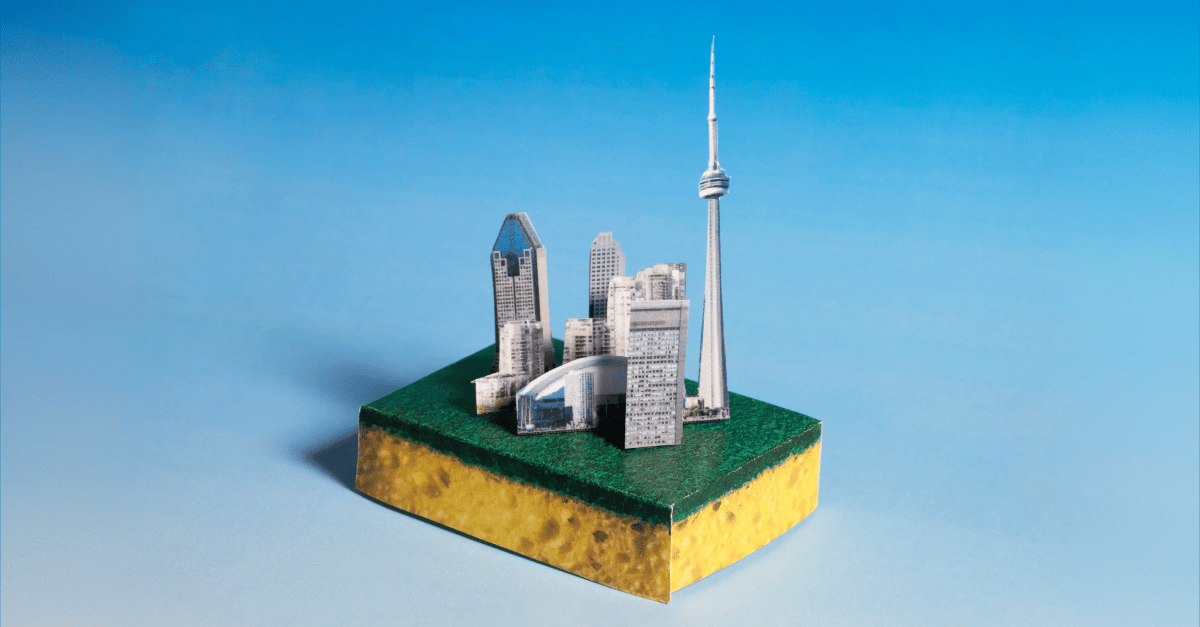
Parks and sidewalks that transform rainy cities into sponges. Climate change has caused heavy flooding in wetter cities, so some of them are experimenting with parks that can retain and filter stormwater via underground tunnels and sidewalks that use porous materials (e.g., sand instead of clay!) to absorb and funnel rainfall into the earth. And they do it without clunky systems of pipes and pumps. Developed by Chinese landscape architect Kongjian Yu and embraced by Copenhagen, the concept has been floated for potential projects in Vancouver and Montreal.
Milwaukee and Atlanta:
Brighter street lighting to send criminals scattering. Here’s a layup of an idea: better-lit streets. It’s a simple fix that can reduce crime by up to 21%, which, of course, is a huge drop for such a minute change. One theory is that the brightness makes criminals feel like they’re being surveilled, and, no less important, it signals that the neighbourhood is a close community that invests in itself — kryptonite to potential ne’er-do-wells.
Sapporo, Japan:
Super-handy sand dispensers to stop snowy wipeouts. Who among us hasn’t fallen on our keister (or worse) during an icy winter? It doesn’t have to be this way! Forget that bag of salt in your garage; Chu, the former mayoral chief of staff, recently posted about a handful of Japanese cities, including Sapporo, that stock public sand-bag dispensers so that pedestrians can de-slick the path in front of them as they walk. You’ll (probably?) never have an embarrassing wipeout again.
Barcelona, Spain:
Traffic-free “superblocks” for quieter, greener neighbourhoods. A constant parade of cars can ruin a neighbourhood, so Barcelona diverts non-local traffic to the outer peripheries of its residential districts. That turns inner streets into a sanctuary for locals, with more room to build parks, courtyards, and pedestrianized spaces. Several admiring cities have designed, piloted, or proposed a similar concept, including Montreal; Vienna, Austria; Bogotá, Colombia; and Los Angeles.

Written By
Jenna Benchetrit
Jenna Benchetrit is the senior business & markets reporter at TLDR, Wealthsimple Media's flagship financial newsletter. She was formerly a senior business writer at CBC News, where she covered economics and consumer issues for a Canadian audience.