Money Diaries
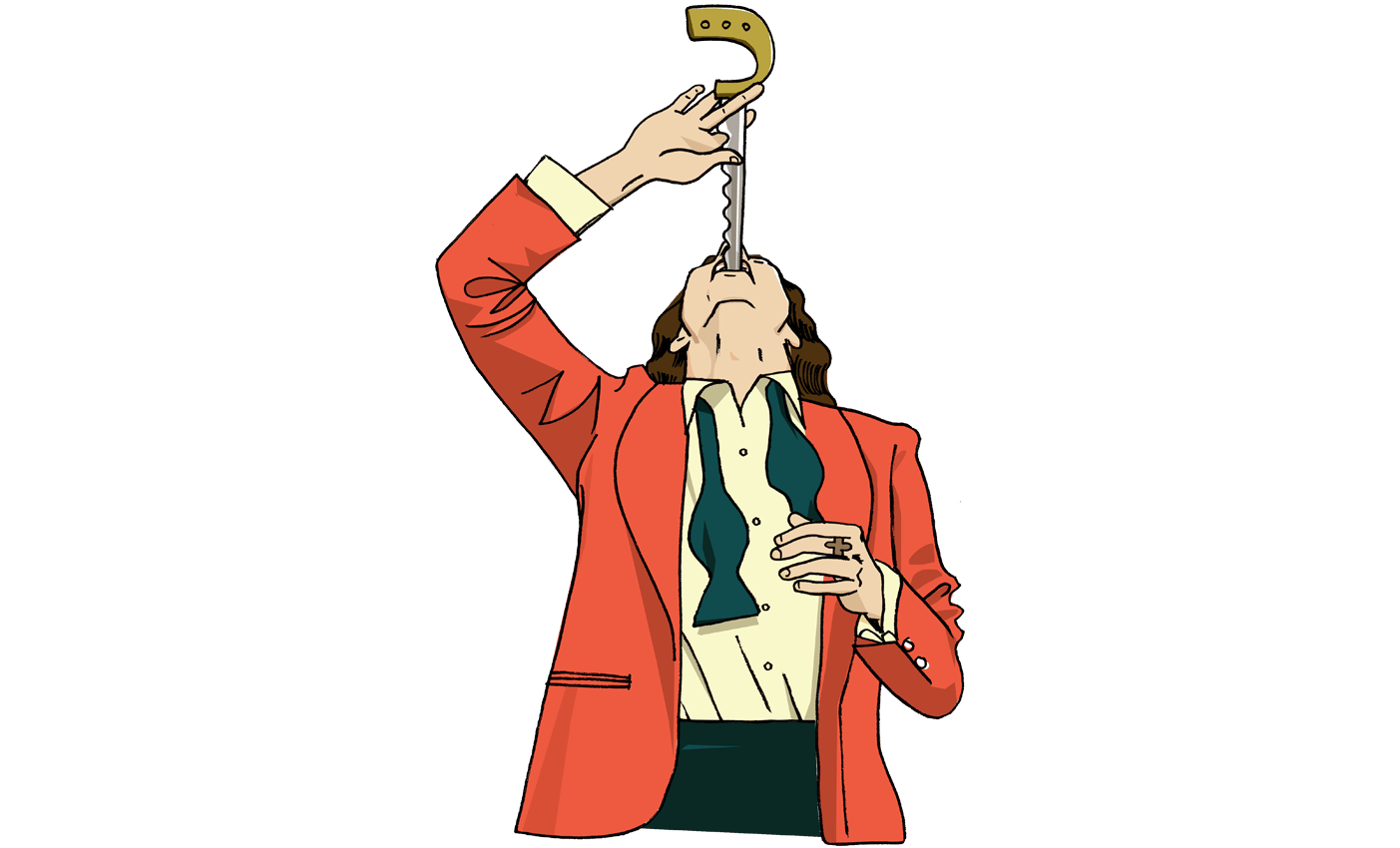
The World's Most Famous Sword Swallower on Becoming the World's Most Famous Sword Swallower
Brett Loudermilk tells the story of learning his trade, hopping a bus to New York with $500, and the first time he ever felt wealthy.
Wealthsimple makes powerful financial tools to help you grow and manage your money. Learn more
Wealthsimple is a whole new kind of investing service. This is the latest installment of our recurring series “Money Diaries,” where we ask interesting people to open up about the role money has played in their lives. Brett Loudermilk has toured the world as a professional sword-swallower and was dubbed a “master showman” by Neil Patrick Harris.
My parents were teenagers when I was born, and I was mostly raised by my mom and by my grandfather, who was a coal miner in West Virginia. His greatest hope for me was that I go to trade school and become an electrician. He felt that trade school signified job security. But I had other plans.
When I was a kid, my grandmother had given me a magic set for a birthday gift, and I became obsessed with magic. Then, at a Renaissance festival, I met a guy who taught me how to eat fire and walk barefoot on broken glass. The one thing he wouldn’t teach me was how to swallow swords. So of course that’s all I wanted to do. At age 15, I started researching the history of sideshow performance. In fact, I began cold-calling legendary sideshow performers around the country—old showmen and carnies like Ward Hall, Bobby Reynolds, and Slim Price, who’d taken sideshows on the road in the 1940s and ’50s—and asking them to share their stories with me.
Late one night, I saw an episode of That’s Incredible on TV, where a man named Todd Robbins was swallowing swords. I found his phone number online, called him, and said, “Hey, my name’s Brett, and I really want to learn how to swallow swords. Will you teach me?” He was hesitant at first—I was just a teenager then. But I dropped names like Ward Hall and Slim Price, and he was completely amazed. He couldn’t believe I knew who these guys were. And after we talked for a while, he agreed to be my mentor.
Todd actually taught me to swallow swords over the phone. It sounds crazy, I know, and to be honest I guess it was. He had me bend a coat hanger in the shape of a sword and guided me through it all—how to position my body the proper way, proper breathing techniques, tips on overcoming the gag reflex. It took months of practice, but eventually I learned how to do it.
At 17, I quit high school and moved to New York City, where Todd Robbins lived, so I could be closer to him and continue learning from him. My mom and grandparents were heartbroken—they figured I’d starve to death on the streets of New York. Honestly, I was nervous, too, leaving my small town in West Virginia. When I hopped on a bus to New York, I had $500, and that’s about it.
I had a couple friends who offered to let me crash on their couches, so rent was covered. I figured I could pay for food and anything else I needed through street performing. I’d had a little experience with that so I thought it would work out. But the Manhattan streets were an entirely different beast. Everyone was rushing somewhere—meeting somebody, heading to work or school. It was almost impossible to even engage them, much less get them to stick around for a performance. My first week, I didn’t make a dollar.
It’s not that I sucked at sword swallowing—I was quickly honing my craft—but I had no idea what it took to capture people’s attention. I didn’t know the skill of separating people from their money. I realized the first skill I needed was being able to stop them, get them to slow down and come close, then keep them there long enough to watch me perform and hand me their cash. That’s the other half of doing what I do.
My trick for doing that was twofold: First I’d do my best to dazzle people for 10 or 15 minutes, and then, after my last trick, I’d find a way to touch them in some heartfelt way and basically guilt them into giving me money. There was a line I stole from a much older sword swallower who also performed on the street: “Next to being a father, this is the best job I’ve ever had.” I was only 17 and looked even younger, so I thought it would be really funny to try saying that. It worked! People were like, “This poor kid, swallowing swords on the street, eating glass, breathing fire, just to feed his family!” And they’d toss me a few bucks.
Recommended for you



There’s one thing people who go into a business like this need to understand: In America, there’s a very fine line between street performers and panhandlers. Before long, I could hit the streets for a day and make $75 to $100. Pretty decent money for a 17-year-old kid. But my family was convinced that I was homeless, and I guess I kind of was, since I didn’t have an apartment of my own. But I always had a couch to stay on, and I was continuing to master my chosen trade. Finally, when I turned 20, I moved out to L.A.
The first couple of years were tough. I bought an old beat-up Ford Taurus station wagon for $1,000 that wasn’t registered and wasn’t insured—I didn’t even have a driver’s license for two years. When I needed gas, I’d put in $5 or $10 at a time, just enough to get me wherever I was going. My biggest fear was that my car would die and I’d lose the money I’d spent on any gas that was left in the tank.
In those days, I’d take any gig I was offered, no matter how awful it sounded. But after a couple years of scrounging any gigs I could get, things suddenly picked up for me. I think it happened because I was able to land a job performing at [legendary Hollywood venue] the Magic Castle. And from there I got bigger gigs around the U.S., like a Super Bowl party in Scottsdale, Arizona, where Snoop Dogg performed with me and pulled swords out of my throat. There were times I’d make $1,200 in a night. Sometimes $10,000. I began to travel to other countries to perform—Canada, Denmark, New Zealand, Dubai. I performed on Penn & Teller’s TV show, got cast on Baskets, the Zach Galifianakis show on FX.
Here’s the thing: I know nothing about money. I just know how to monetize this weird thing I do. I often joke that I want to be making a living while doing the least amount of work possible. But it’s not really a joke—it’s a real thing. There are tons of people in the world who do very little work and make more money than I can ever imagine, and I want a piece of that. And the reason is, with my free time I want to create art and performances that will make people happy. I love gigs where I can do 15 minutes of work and make a ridiculous sum of money that I can live off of for six months while I explore my own passion projects and weird fanciful ideas.
My problem is that I have a habit of getting a bunch of money, buying all these things I’ve had my eye on, and instantly being broke again. I’ll spring for a pair of $400 boots. Or an expensive, custom-made suit. And I’m especially into antiques and oddities. Right now, for example, I’m considering spending $5,000 on a headboard made from a vintage 1800s lion cage. One of the weirdest things I own is a chandelier that I made from a human torso—an actual anatomical skeleton I wired up and hung in my living room. People wonder, Why would I do something like that? Because I have this money! Money I worked very little for. I often justify purchases based on how long it took me to make the money I’m spending. Because I’m really lucky to have a job where my hourly rate is absurd. I suppose I’m being paid for talents, expertise, and experience that were developed over a decade of hard work, but sometimes it takes me only ten minutes to do a show and get a ridiculous check. I usually spend it just as quickly.
This November, I’ll be in a live show called Band of Magicians that opens at the Tropicana in Las Vegas. It’s a fun show—four buddy magicians just hanging out having a great time on stage. But I’m most excited about a one-man show I’m developing, and developing magic tricks and performance ideas for some of the biggest-name magicians out there. I’m really passionate about my work as a consultant, helping other artists create.
As for my mom and my grandparents, they’re all really proud now. I’m happy to sit on the other end of the phone and listen to them be excited for me. It’s nice. They’re excited that I can make a living with what I do and not ask them for money. (I ask plenty of people for money, but not them!)
But the moment I realized that I was in the right business, and doing the right thing, was after I started my first Vegas gig when I filled my whole gas tank up without even thinking about it. It was a thing I’ll always remember. Gas was up over $4 a gallon, but I didn’t care. I just squeezed the gas pump and watched the numbers climb and climb, and then I heard a sound I may have never heard before in my life—the loud CLICK of the gas pump shutting off since my tank was full. Best sound ever.
As told to Davy Rothbart exclusively for Wealthsimple, the largest automated investing service in Canada. We make investing simple, smart and affordable.

Written By
The Editors
Wealthsimple's education team is made up of writers and financial experts dedicated to making the world of finance easy to understand and not-at-all boring to read.